
Premium fertilizer, broadleaf weed control, full pest coverage, and soil probiotics to push recovery and root growth during the best growing window of the second half of the year.
Why Early Fall Is the Best Time to Rebuild Your Lawn
Fall is when cool-season lawns in Pennsylvania, Maryland, and Virginia do their best work. Once air temperatures drop back into the 60s and soil temperatures cool from their summer peak, tall fescue, Kentucky bluegrass, and other cool-season grasses shift out of survival mode and into aggressive growth. Roots deepen, turf thickens, and the lawn has its best opportunity of the year to recover from summer stress and build the reserves it will need to get through winter.
This makes early fall the most important fertilization window outside of spring. A lawn fed at the right time in September or October pushes root development and density before the ground freezes. Lawns that go into winter with a strong root system and dense turf come out of dormancy faster in spring and are far less vulnerable to winter injury, snow mold, and early weed pressure.
Fall is also the single best time to treat perennial broadleaf weeds. As plants prepare for winter dormancy, they move carbohydrates from their leaves down into their roots. Herbicide applied during this window travels with that movement, reaching the root system more deeply than spring or summer applications. Dandelions, clover, and other persistent broadleaf weeds that survived earlier visits are most vulnerable right now.
What Happens During Visit 5
Visit 5 is the most complete treatment of the fall program. Here is what we apply and why each piece matters for where your lawn is in the season.
Premium Fertilizer
The fertilizer we apply during Visit 5 is not the same product used in spring. Fall fertilization is about root development and recovery, not pushing top growth. We use a professional-grade formula balanced for fall conditions in the Mid-Atlantic, with the nitrogen release timed to feed the lawn steadily as it moves through its most productive growth window before going dormant.
A well-fed lawn in September and October develops a denser root system and thicker turf canopy heading into winter. That density is what makes spring green-up happen faster, crowds out early weed germination, and gives the lawn a head start on the new season before the first mowing of the year.
Dandelion, Clover, and Broadleaf Weed Control
As temperatures cool in September and October, dandelions, clover, and other perennial broadleaf weeds begin moving carbohydrates from their leaves down into their roots in preparation for winter. A herbicide applied during this window gets carried along with that movement, penetrating the root system more thoroughly than at any other point in the growing season. The plant is doing the work for you.
A weed treated in the fall is far less likely to return the following spring than one treated in spring or summer. For homeowners who have noticed the same broadleaf weeds coming back year after year despite repeated treatment, spring and summer application is why those efforts sometimes come up short. Visit 5 targets that have pushed through over the summer and treat them at the most effective point in the season.
Flea, Tick, Spider, and Surface Insect Control
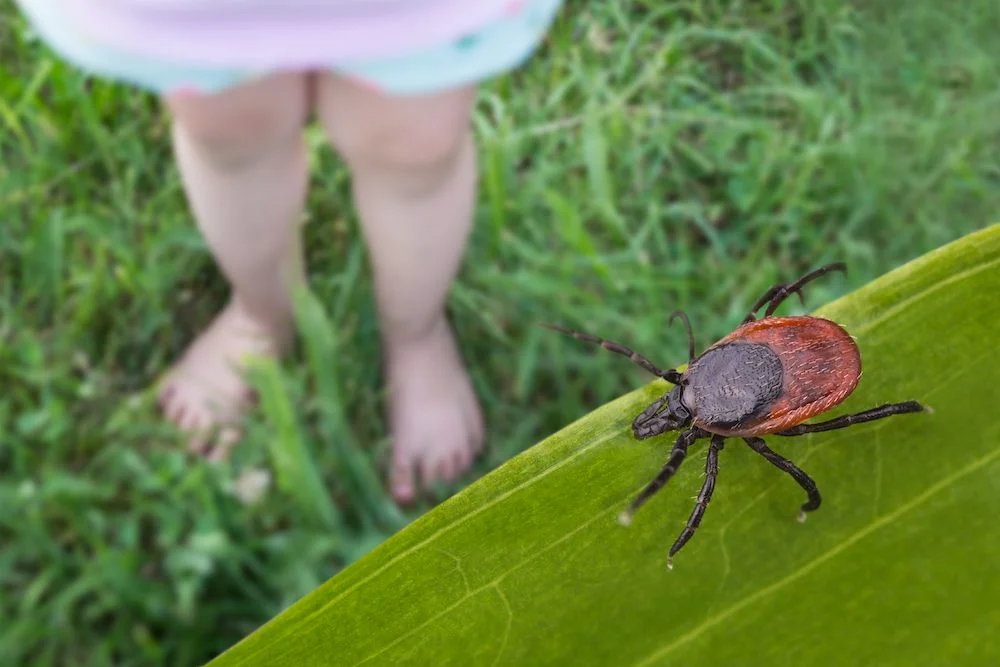
Ticks do not stop being a concern when summer ends. Across PA, MD, and VA, blacklegged tick nymphs are active through summer, and adult ticks become more active again in fall as temperatures cool. September and October are high-risk months for tick exposure in this region, particularly for families who spend time outdoors during the fall season.
Fleas and other surface insects remain active through the first hard frost as well. The Visit 5 surface insect treatment keeps the lawn protected through the end of the outdoor season, so coverage does not lapse during a period when many homeowners assume the pest season is already over.
Perimeter Pest Control
As temperatures drop in fall, insects that spent the summer in your lawn begin looking for warm places to overwinter. Ants, spiders, stink bugs, and other pests move toward foundations and look for entry points into the home during September and October. Perimeter pest control applied during Visit 5 treats the exterior foundation zone at the right time to interrupt that migration.
This is the second perimeter application of the program, the first having been applied during Visit 2 in late spring. The combination of spring and fall perimeter treatments covers both the warm-season emergence period and the fall overwintering migration, which are the two points in the year when foundation pest pressure is highest.
Soil Probiotics
Soil probiotics applied in early fall support the same microbial activity that has been building through the program since spring. With temperatures cooling and the lawn entering its most active growth phase of the year, the beneficial microorganisms in the soil are working to break down thatch, improve moisture retention, and make the nutrients from the fall fertilizer application more available to grass roots.
A lawn going into winter with healthy, active soil biology recovers faster in spring. The soil conditions built through the program do not reset when the grass goes dormant. They carry forward, which is why each probiotic application through the season is an investment in the lawn, not just a single-visit fix.
What to Expect After Visit 5
Fall is when the program’s results become the most visible. Here is what homeowners typically notice after early fall treatment.
7 to 14 days: The fertilizer starts working and you should notice the lawn deepening in color and picking up growth rate. Broadleaf weeds that were treated will begin showing signs of stress, curling, and yellowing before dying back over the following few weeks.
Through October: Your lawn should be visibly thicker and greener than it was coming out of summer. Treated broadleaf weeds will have died back, and the turf should be filling in over areas that thinned during the summer. This is the window where a well-maintained lawn separates itself clearly from a neglected one.
Going into winter: A lawn that has completed Visit 5 is in its strongest position of the year. Dense turf, deep roots, active soil biology, and a clean weed picture heading into dormancy. Visit 6 follows up with a final winterizer application to lock in those gains and carry the lawn through to spring.

Common Questions About Early Fall Lawn Treatment
When is the right time for fall lawn treatment in PA, MD, and VA?
The ideal window for early fall treatment is mid-September through mid-October in most of our service area. Soil temperatures need to have dropped below their summer peak for the fertilizer to be absorbed efficiently and for the broadleaf herbicide to travel effectively into weed root systems.
Applying too early while the soil is still very warm reduces the impact of both treatments. Our scheduling is built around the seasonal conditions in Central PA, Western Maryland, and Northern Virginia, not a fixed calendar date.
Is it too late to overseed if I skipped it in late summer?
Early October is generally the outer edge of the viable seeding window for cool-season grasses in this region. Seedlings need at least four to six weeks of adequate growing conditions before the first hard frost to develop enough root mass to survive winter.
If you are in early October and have bare spots to fill, it is worth trying with the understanding that germination and establishment may be uneven depending on how quickly temperatures drop. Seeding in mid-October or later carries a significant risk of failure. If you miss the fall window, late August to mid-September the following year is the next reliable opportunity.
Should I aerate before the fall treatment?
Core aeration before or around the time of Visit 5 is a good idea for lawns with compaction or heavy thatch. Aeration opens channels in the soil that allow the fall fertilizer, lime from Visit 4, and soil probiotics to reach the root zone more directly rather than sitting on top of a thatch layer. If you are also overseeding, aeration is especially helpful because it improves seed-to-soil contact significantly. Let us know if aeration is something you want to schedule alongside the fall treatment.
Why do the same weeds keep coming back every year?
Perennial broadleaf weeds like dandelions and clover survive spring and summer herbicide treatments because those applications rarely kill the root system completely. The plant looks dead above ground, but regenerates from the root in the fall or the following spring.
Fall treatment is more effective because the plant is actively moving resources into its roots at that time of year, which means the herbicide travels deeper and causes more thorough damage. Consistent fall treatment, combined with a thick and healthy turf that gives weeds less bare ground to colonize, is what breaks that cycle over time.
Ready to Make the Most of Fall?
The fall window is short and the timing matters. A lawn treated at the right point in September or October heads into winter in a much stronger position than one that misses the window. Contact TurfMedic to stay on schedule or get a free quote.
Part of the TurfMedic Lawn Care Program: Visit 5 is Step 5 of our 6-visit program. See the full schedule in our overview of top turf care programs.
Previous visit: Visit 4 covered maintenance lime, targeted weed spot treatments, and continued pest control through the heat. See what happened in our late summer lawn treatment.
Next up: Visit 6 is the final application of the year. A winterizer fertilizer formulated for fall feeding locks in root development and prepares your lawn for spring. See what happens in Visit 6.
Recent Comments