
Selective herbicide treatments applied across five visits each year to keep dandelions, clover, and other broadleaf weeds out of your lawn season after season.
Why Broadleaf Weeds Keep Coming Back Year After Year
Dandelions and clover are perennial plants. They do not die in fall and return from seed the following spring the way crabgrass does. Instead, their root systems survive winter underground, and the same plants that were treated in spring push new growth again the following year. A treatment that kills the visible leaves above ground often leaves enough of the root system intact for the plant to regenerate.
This is why broadleaf weed control applied once or twice a year rarely produces a clean, lasting result. Managing dandelions, clover, and other perennial broadleaf weeds requires consistent treatment at the right points in the season, when the weeds are actively growing and most vulnerable to herbicide uptake. It also requires a healthy, dense lawn that leaves less bare ground for weeds to colonize in the first place.
New broadleaf weed pressure also arrives continuously. Dandelion seeds blow in from neighboring properties. White clover spreads by runners above the soil surface and by seed, which moves with foot traffic, mowing, and soil disturbance. A single missed weed that goes to seed can introduce hundreds of new seeds into the lawn. Staying ahead of that pressure is the only way to keep it from accumulating.
How Broadleaf Weed Control Works
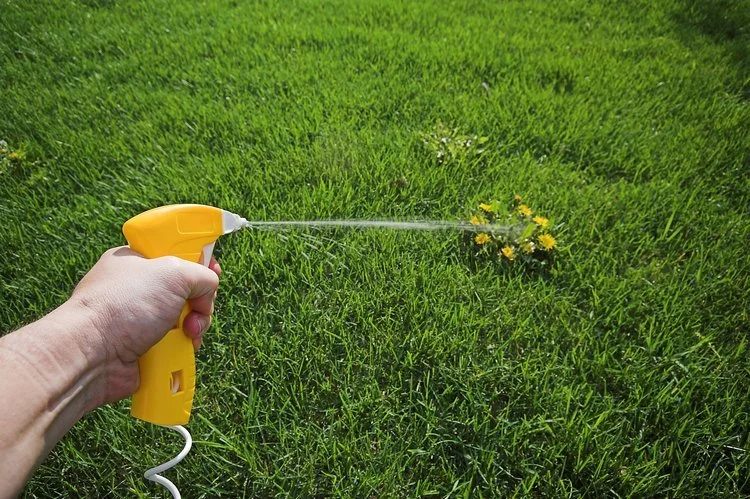
Broadleaf herbicides are selective, meaning they target broadleaf plants while leaving desirable grasses unaffected. The active ingredients are absorbed through the leaves and stems of the weed, move into the vascular system, and disrupt growth processes throughout the plant, including the root. This is different from a contact herbicide that only damages what it touches on the surface.
For broadleaf herbicide to work well, the weeds need to be actively growing at the time of application. A plant that is stressed, dormant, or going into dry-weather shutdown is not moving as much water and nutrients through its system, which means the herbicide does not travel as effectively into the root. Applications made to actively growing weeds in spring and fall consistently outperform those made during summer heat stress or dry conditions.
Temperature also matters. Liquid broadleaf herbicide applied when air temperatures are forecast to exceed 85 degrees can volatilize, turning to vapor and drifting to ornamentals, shrubs, and garden beds nearby. TurfMedic technicians work around the forecast to schedule applications when conditions support effective, targeted treatment without off-target risk.
When TurfMedic Treats Broadleaf Weeds Through the Season
Broadleaf weed control is not a single annual treatment in the TurfMedic program. It runs across five of the six visits because weed pressure does not stop at a single point in the season. Here is how treatment timing maps across the year.
Early and Late Spring (Visits 1 and 2)
Spring is when perennial broadleaf weeds push their first strong growth of the year. Dandelions in particular are very active in April and May, and that activity makes spring one of the more effective treatment windows. Herbicide applied to actively growing spring weeds moves efficiently into the plant and produces noticeable results within one to two weeks.
The Visit 1 and Visit 2 applications address the weeds present at each point in the season. Spring treatment does not eliminate all broadleaf weeds for the year, but it reduces the population heading into summer and prevents the early-season weeds from going to seed.
Early and Late Summer (Visits 3 and 4)
Broadleaf weed pressure does not stop when temperatures rise. New germination from seeds already in the soil continues through summer, and established perennial plants keep growing. Visits 3 and Visit 4 target the weeds that survived spring treatment and any new growth that has pushed through since then.
Summer applications are managed carefully around temperature. We avoid liquid broadleaf herbicide when daytime temperatures are forecast above 85 degrees. In late summer, as temperatures begin to cool from their peak, herbicide effectiveness improves and the approach to fall treatment begins.
Early Fall (Visit 5): The Most Effective Treatment Window
Fall is the most effective time of year to treat perennial broadleaf weeds. As temperatures cool in September and October, dandelions, clover, and other perennial weeds begin moving carbohydrates from their leaves down into their roots in preparation for winter. Herbicide applied during this window travels with that movement, penetrating the root system more thoroughly than spring or summer applications.
A dandelion treated in the fall is far less likely to return the following spring than one treated in spring or summer. For homeowners dealing with persistent broadleaf weed pressure despite regular treatment, fall application is often what is missing from their approach. The Visit 5 application targets whatever has built up over the summer at the point in the season where control is most thorough.
What to Expect After Broadleaf Weed Treatment
Broadleaf herbicide does not kill weeds overnight. Here is what the process looks like after a treatment.
Days 3 to 7: Treated weeds begin to show signs of stress. Dandelion leaves curl and yellow. Clover patches start to brown. The herbicide is moving through the plant during this period.
Days 10 to 21: Treated weeds die back. The timeline varies by plant size, species, temperature, and time of year. Fall treatments may show a slower visible response as temperatures drop, but the herbicide is still working into the root system.
After dieback: Dead weeds leave gaps in the lawn. A dense, healthy turf fills those gaps more quickly. Thin lawns tend to see new weed germination in the same spots shortly after treatment, which is why broadleaf weed control works best as part of a full program that also improves turf density.
Keep Weeds Out All Season Long
One or two treatments a year is not enough for persistent broadleaf weeds. The TurfMedic program treats five times across the season at the points where control is most effective. Contact TurfMedic to get on the schedule or get a free quote.
Part of the TurfMedic Lawn Care Program: Broadleaf weed control is applied during Visits 1, 2, 3, 4, and 5. See the full season schedule in our best lawn care programs.
Common Questions About Broadleaf Weed Control
Is clover actually a weed?
Clover was once intentionally included in grass seed mixes because it fixes nitrogen and stays green in dry conditions. It fell out of favor as broadleaf herbicide use became more common, since selective herbicides that killed dandelions also killed clover. Whether you consider clover a weed depends on what you want your lawn to look like. For homeowners trying to maintain a uniform turf appearance, clover creates an uneven texture and color, attracts bees in summer, and can spread aggressively into thin areas. If you want it controlled, we treat it. If you want to leave patches of it, we can adjust our approach.
Will the herbicide hurt my flower beds or garden?
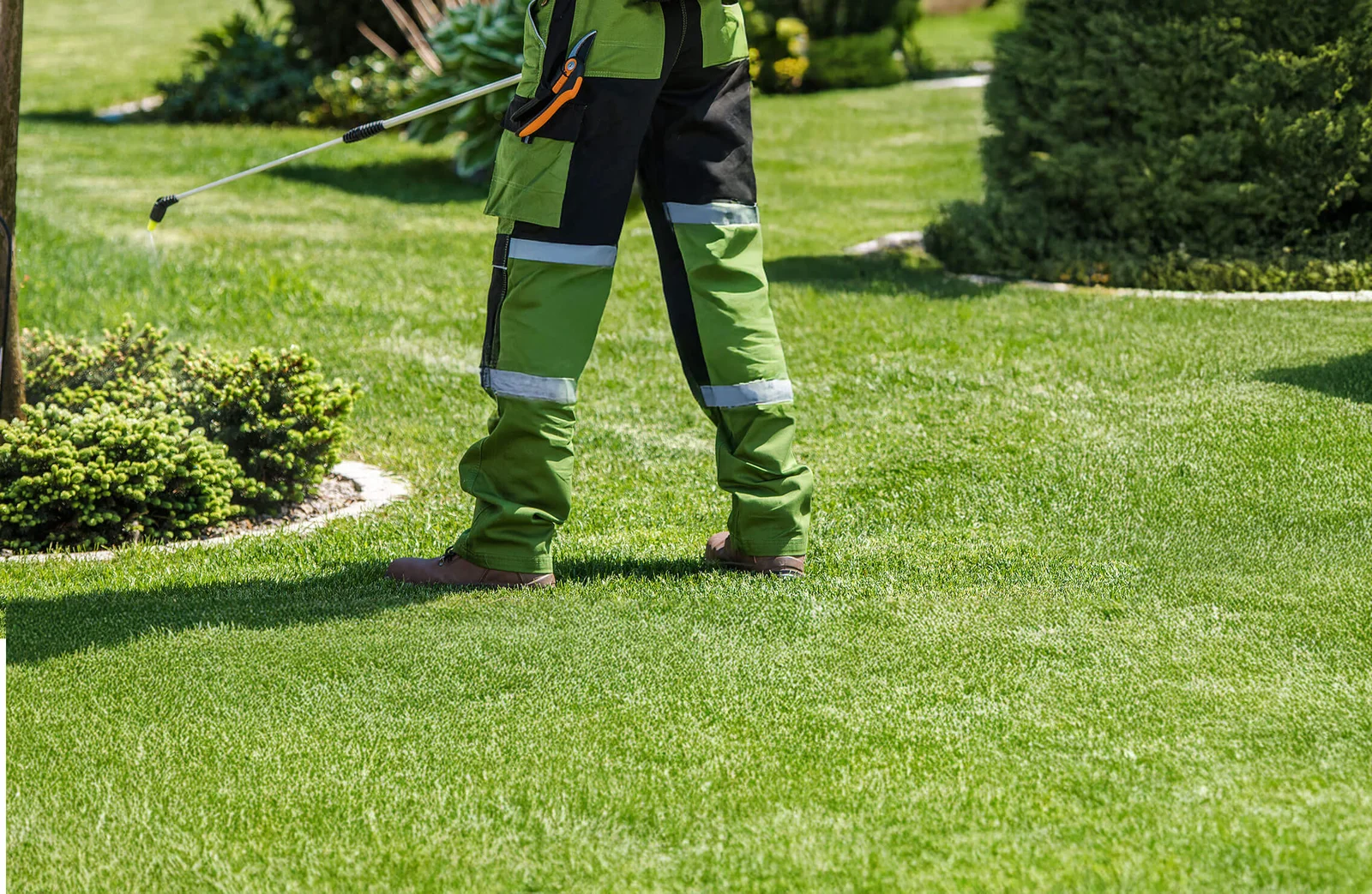
Selective broadleaf herbicides are formulated to target broadleaf plants, which includes many ornamentals, flowers, shrubs, and garden vegetables in addition to weeds. Drift or runoff onto garden beds can cause damage. Our technicians apply treatments carefully to avoid beds and borders, and we avoid high-temperature applications that increase volatilization risk. If you have sensitive plantings close to lawn edges, let us know before the visit and we can adjust our application approach around those areas.
Why do dandelions keep coming back after treatment?
Two things cause dandelions to reappear after treatment. First, dandelion taproots are deep and resilient. A treatment that does not move fully into the root system leaves enough of the plant alive to regenerate. Fall treatment produces the most thorough root penetration because the plant is actively pulling energy downward. Second, dandelion seeds blow in continuously from surrounding areas. A treated dandelion that dies is often replaced by a new seedling from off-site within the same season. Consistent treatment combined with a dense turf that shades out seedlings is the long-term answer.
How long does it take to get a weed-free lawn?
A completely weed-free lawn is not a realistic expectation for most properties. New seeds arrive constantly from neighboring lawns, roadsides, and open areas, and no treatment can stop that. What a consistent broadleaf weed control program does is reduce the population steadily over time, prevent existing weeds from going to seed, and improve turf density to the point where weeds have less room to establish. Most homeowners on the full TurfMedic program see a noticeable reduction in broadleaf weed pressure in the first season, with continued improvement in subsequent years.
Recent Comments