
Preventative Grub Control in PA, MD, and VA
A precisely timed treatment applied in June or early July to stop Japanese beetle and chafer beetle larvae before they hatch and begin feeding on the roots of your lawn.
Expert Weed Control & Lawn Service
Welcome to Turf Medic, your trusted source for weed control in Greencastle, PA. We understand the frustration and annoyance of dealing with unwanted weeds in your lawn and garden. That’s why we offer expert weed management services to keep your outdoor space looking beautiful and weed-free.
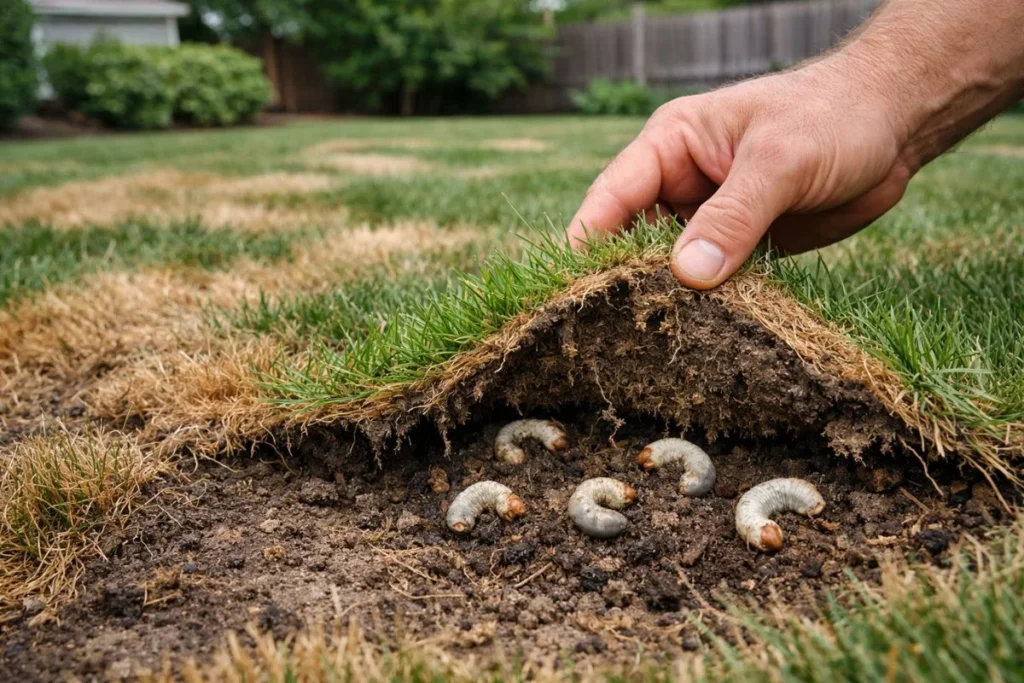
Root feeding happens underground, where you cannot see it. By the time the damage becomes visible above ground, typically as brown patches that appear in August or September, the grubs have already destroyed enough of the root system that the turf has lost its ability to take up water. The damaged areas pull away from the soil surface like a loose rug because the roots that held the turf in place are gone.
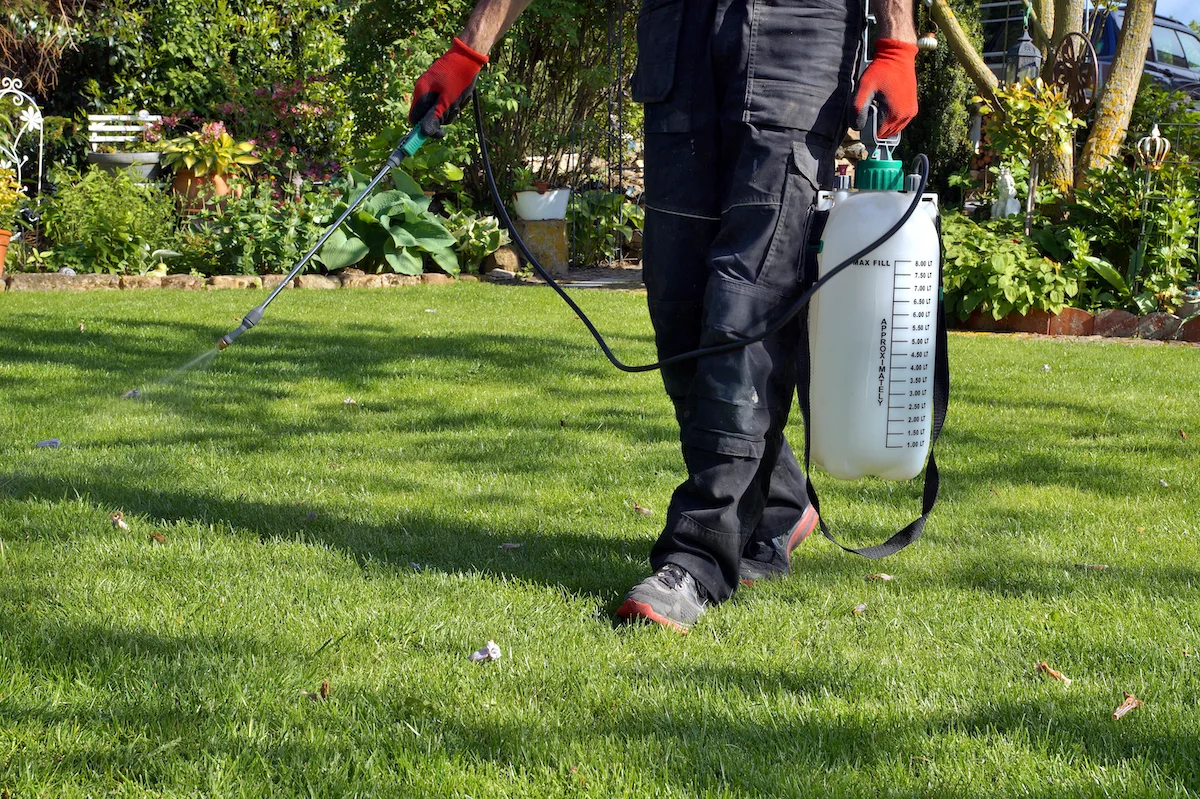
The treatment window for preventative grub control is June through early July, before the eggs hatch. A preventive product applied during this window enters the soil and targets young larvae as they emerge from eggs near the surface, when they are small, shallow, and most vulnerable. As summer progresses and grubs grow larger and move deeper into the soil, the same products are far less effective, and curative options yield inconsistent results.
Preventative vs. Curative Grub Control: Why the Difference Matters
Homeowners sometimes ask why grub treatment needs to happen in June when the damage does not show up until August. The answer is in how the products work and what they can reach.
Preventative products are applied before the eggs hatch. They move into the soil and remain active in the root zone. When eggs hatch and young larvae begin laying eggs and feeding, they come into contact with the product at their most vulnerable stage. The treatment is effective because it is in the right place at the right time.
Curative products are applied after grubs are already established and feeding. By August, grubs that hatched in July have grown larger, moved deeper in the soil, and are harder to reach with soil-applied treatments. Curative applications can reduce grub populations but rarely eliminate them completely, and they cannot undo root damage that has already occurred. A lawn treated curatively in August may still lose turf in the damaged areas even if the grubs are eventually controlled.
One well-timed preventative application in June or early July protects the lawn through the entire grub season. It is simpler, more effective, and less expensive than managing an active grub infestation after the damage has started.
How to Know If Your Lawn Has a Grub Problem
Grub damage is easy to misread. The brown patches that appear in late summer look like drought stress or disease, and many homeowners water heavily in response without improvement. Here are the signs that point specifically to grub damage.
- Irregular brown patches in late summer. Drought stress tends to brown the lawn evenly. Grub damage shows up in irregular patches that do not respond to watering.
- Turf that peels back from the soil. Healthy turf is held in place by roots. Grub-damaged turf pulls back like a loose section of carpet because the roots are gone.
- Animal digging. Skunks, raccoons, and birds dig into grub-infested lawns to feed on the larvae. Fresh digging in late summer or fall is often one of the first signs of a grub problem.
- Visible grubs below the turf. If you peel back a section of damaged turf and find C-shaped white larvae in the top two inches of soil, grubs are the cause. More than five grubs per square foot is generally considered a damaging population.
If you notice any of these signs in summer or fall, let us know. If grubs are confirmed, we can advise on the best approach for that point in the season. The ideal situation, however, is preventative treatment in June that stops grubs before any of these signs appear.
What to Expect After Preventative Grub Treatment
Preventive grub control does not produce a visible result after application. The product is working in the soil, and the protection it provides shows up as the absence of damage, not as a visible change on the surface. Here is what to watch for across the season.
After application: The product needs to be watered into the soil to move into the root zone, where grubs will hatch. Rain or irrigation in the days following application is important. Without adequate moisture, the product may not reach the target depth.
Through July and August: The product is active in the soil. Grubs that hatch and begin feeding encounter the treated zone and die before they can establish. You will not see this happening, but a lawn with preventative treatment in place will not develop the late summer brown patches that appear in untreated lawns with grub pressure.
Into fall: A lawn without grub damage goes into fall in a much stronger position. The root system is intact, the turf is dense, and the lawn can take full advantage of the fall growth window. Neighboring untreated lawns may develop patches that require seeding or renovation. Yours should not.
Comprehensive Lawn Services
At Turf Medic, we understand that effective lawn care extends well beyond basic weed control. Our services are designed to stop weeds comprehensively, ensuring your lawn remains lush and vibrant. In Greencastle, PA, we’re renowned for our expert services weed, which includes pre-emergent solutions to halt weeds before they become a problem.
Our approach tackles stubborn broadleaf grass and more, using professional grass management techniques tailored to the specific needs of your lawn. Our tree and pest services further complement our lawn care offerings, delivering an all-encompassing solution for your outdoor space. With Turf Medic, experience unparalleled service as we expertly control weeds, nourish lawns, and protect trees from pests. Trust us to deliver custom residential weed management programs that transform Greencastle lawns into pristine green havens.

Common Questions About Preventative Grub Control
Do I definitely have grubs if my lawn turns brown in summer?
Not necessarily. Late summer browning is most commonly caused by drought stress in cool-season lawns. The way to tell the difference is to tug on the brown turf. If it stays firmly anchored, the roots are intact and drought is the likely cause. If it peels back easily, grubs are likely involved. You can also cut a small section and look just below the soil surface for C-shaped white larvae. If you are uncertain, contact us before your scheduled visit and we can check.
Does every lawn need grub treatment every year?
Grub pressure varies by location, year, and beetle population. Some properties are at higher risk due to proximity to wooded areas, the presence of ornamental plants that attract Japanese beetles, or a history of prior grub damage. Not every untreated lawn develops a damaging grub population every year.
However, grub damage is expensive to repair and difficult to predict in advance. Annual preventative treatment costs far less than overseeding or repairing sections of lawn that grubs have destroyed, which is why it is included as a standard part of the Visit 3 program rather than treated as an optional add-on.
My lawn already has brown patches. Is it too late for grub treatment?
If brown patches have appeared and grubs are confirmed below the surface, the preventative window has passed. Curative treatment options are available but less reliable than preventive applications and cannot reverse root damage that has already occurred. The damaged areas will likely need overseeding in late summer or fall once the grub population is reduced. Contact us as soon as possible if you suspect an active grub infestation, so we can assess the situation and recommend the right approach at this stage.
Is grub control safe around children and pets?
Once the product has been watered into the soil and the lawn surface is dry, it is safe for children and pets. Grub control products are granular or liquid formulations that move into the soil after application, where they are not accessible at the surface. We use products registered for residential use and applied by licensed technicians. If you have specific concerns about product ingredients or have a pet with known sensitivities, we can provide the product details from your specific visit.
Do Not Wait Until You See the Damage
The grub control window opens in June and closes before most homeowners notice any problem. By the time brown patches appear in August, the treatment window is gone and the damage is done. Contact TurfMedic to stay on schedule or get a free quote.
Part of the TurfMedic Lawn Care Program: Preventative grub control is applied during Visit 3. See the full season schedule in our top residential lawn care programs.
