
Soil Probiotics for Lawns in PA, MD, and VA
Beneficial microorganisms applied on every visit to build healthier soil biology, break down thatch, improve moisture retention, and help your lawn make better use of everything else in the program.
What Soil Probiotics Are and Why They Matter for Your Lawn
Healthy soil is not just dirt. It is a living system populated by billions of microorganisms, including bacteria, fungi, and other beneficial microbes, that work continuously to break down organic matter, cycle nutrients, and maintain the soil’s physical structure. When that microbial community is healthy and active, grass roots have better access to nutrients, the soil holds moisture more effectively, and the turf is more resilient under stress.
Soil probiotics are concentrated applications of beneficial microorganisms designed to support and strengthen that biology. Just as probiotic supplements support gut health in people, soil probiotics introduce and reinforce the microbial populations that make soil function well. Over time and with repeated application, they shift the soil environment in a direction that supports better grass growth.
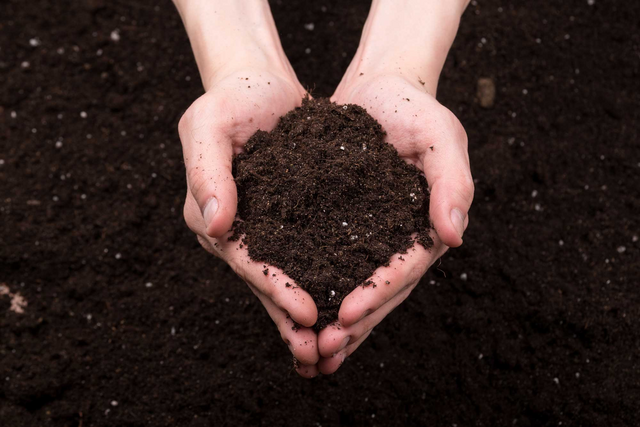
Most lawn care programs focus entirely on what goes on top of the soil. TurfMedic includes soil probiotics on every visit because the condition of the soil itself determines how well everything else in the program works. Fertilizer is more available to roots when the microbial community is actively processing nutrients. Lime works better in biologically active soil. A lawn with healthy soil biology simply performs better than one that lacks it.
What Soil Probiotics Do for Your Lawn
The benefits of healthy soil biology show up across multiple areas of lawn performance. Here is what consistent probiotic application supports over the course of the season.
Thatch Breakdown
Thatch is the layer of partially decomposed grass stems, roots, and organic debris that accumulates between the soil surface and the green grass blades above. A thin layer of thatch is normal and beneficial. A thick layer blocks water and nutrients from reaching the root zone, harbors disease organisms, and creates conditions where insects can establish.
Beneficial soil microorganisms are the primary agents of thatch decomposition. When soil biology is healthy, thatch breaks down at a rate that keeps pace with its accumulation. When microbial activity is low, thatch builds up faster than it breaks down and the layer becomes a problem. Regular probiotic applications keep decomposition active and thatch levels in check without the mechanical disruption of power raking or dethatching.
Moisture Retention
Biologically active soil has better physical structure than compacted or biologically depleted soil. The activity of beneficial microorganisms creates aggregates and channels in the soil that allow it to absorb and hold water more effectively. A lawn with healthy soil biology retains moisture longer after rainfall, needs less supplemental irrigation during dry stretches, and recovers from drought faster once rain returns.
This benefit is most noticeable during summer stress periods. Lawns with active soil biology hold their color and density better during July and August dry spells than lawns with depleted or inactive soil biology, even when both receive the same surface treatments.
Nutrient Availability
Soil microorganisms play a key role in the nutrient cycle. Bacteria and fungi break down organic matter and convert nutrients into forms that grass roots can absorb. The microbial community supports the full nutrient cycle, making nitrogen, phosphorus, potassium, and trace minerals more available to grass roots in forms they can absorb.
This means every fertilizer application in the program performs better when the soil biology is active. The nutrients go further, the lawn responds more visibly, and less product is lost to leaching or volatilization because the soil is better equipped to hold and process what is applied.
Stress Tolerance and Recovery
A lawn built on healthy soil biology is more resilient under stress. Heat, drought, heavy foot traffic, and disease pressure all take a greater toll on grass growing in biologically depleted soil than on grass growing in biologically active soil. The root systems are deeper, the nutrient availability is more consistent, and the physical soil structure supports recovery rather than working against it.
This is a long-term benefit that builds over the course of the program. A lawn in its second or third year of consistent probiotic application typically handles summer stress and recovers from it more quickly than a lawn receiving its first season of treatment.
When TurfMedic Applies Soil Probiotics
Soil probiotics are applied on every visit across the six-visit program, from early spring through late fall. This is intentional. Building soil biology is not something that happens in one or two applications. It requires consistent reinforcement across the season as soil temperatures, moisture levels, and microbial activity fluctuate.
Early spring applications get microbial activity moving as soils warm and the growing season begins. Summer applications help the soil biology maintain function during heat and drought stress. Fall applications support the soil through its most productive period of the year and carry the microbial community into winter in the best possible condition. The soil conditions built through the season do not fully reset when the grass goes dormant. Each application is an investment that carries forward.
What to Expect From Soil Probiotic Applications
Soil probiotics do not produce dramatic visible results in the days after application. The benefits build over time. Here is what most homeowners notice across the season and from year to year.
Within the first season: Better moisture retention during dry periods, improved response to fertilizer applications, and a gradual reduction in thatch thickness. The lawn may hold its color better through summer stress than in previous years.
Year over year: The improvement builds with each passing season. Lawns in their second and third year on the program with consistent probiotic applications typically show noticeably healthier soil structure, better drought tolerance, faster recovery from stress, and a thicker, denser turf canopy than they did when the program started.
Important note: Soil probiotics work best when they are not disrupted by excessive chemical inputs or soil disturbance. Aeration, while beneficial, temporarily disrupts the microbial community near the surface. This is normal, and the biology recovers quickly. Heavy applications of fungicides or pesticides to the soil can reduce microbial populations. We factor this into how and when we apply treatments across the program.
Build a Lawn That Works From the Ground Up
Most lawn care stops at the surface. TurfMedic includes soil probiotics on every visit because what happens in the soil determines how well everything else performs. Contact TurfMedic to get on the schedule or get a free quote.
Part of the TurfMedic Lawn Care Program: Soil probiotics are applied on every visit across the six-visit program. See the full schedule in our professional lawn care programs.
Common Questions About Soil Probiotics for Lawns
Are soil probiotics the same as fertilizer?
No. Fertilizer delivers nutrients directly to the grass. Soil probiotics improve the soil environment, allowing the grass to access those nutrients more effectively. They serve different purposes, which is why the program includes both. Probiotics make fertilizer work better. Fertilizer gives the grass what it needs to grow.
Will I see a visible difference after each application?
Not right away. Soil biology builds gradually. The benefits, better moisture retention, improved fertilizer response, reduced thatch, stronger color under stress, become more noticeable over the course of the season and build from year to year. Most homeowners see a clear difference by the second or third season.
Can I buy soil probiotics and apply them myself?
Consumer products are available but vary widely in quality, concentration, and microbial diversity. Professional formulations are selected for regional soil conditions and applied consistently across the season. One DIY application in spring will not produce the same result as six applications timed through the season.
My lawn has heavy clay soil. Do soil probiotics help?
Yes. Clay soils are common in Central PA, Western Maryland, and Northern Virginia, and microbial activity is one of the primary ways clay soil structure improves over time. Beneficial microorganisms create aggregates that open up clay particles, gradually improving drainage and root penetration. It takes longer to see results in heavy clay than in lighter soils, but consistent probiotic application is one of the most practical long-term tools available.
